If you don't host it, you rent it: reading Odyssey's $1.45B against Fable's blackout
Author
Oleksandr Kotliarov
Date
July 8, 2026
Reading Time
7 min
Odyssey raised $310 million at a $1.45B valuation on June 17, with Amazon on the cap table and AWS Trainium as its preferred compute. Five days earlier, on June 12, every team building on Anthropic’s Fable 5 watched the model go dark with no notice. Read those two dates together, because they are the same story told from opposite ends.
One end is capital moving into generated reality at a speed that should make any technical buyer pay attention. The other is a reminder that the capability you reach for through an API is rented, and the lease terms are not yours to set.
The frontier is funded, and it is crowded
Odyssey builds world models — real-time, generated, interactive video you can move through rather than watch. Its founders come from autonomy: Oliver Cameron from Cruise and Voyage, Jeff Hawke as a founding engineer at Wayve. The shipped families (Odyssey-2 Max, Starchild-1 at roughly 50ms latency for multi-minute streams) are early, and Hawke himself has called this the GPT-2 phase of world models: promising, clearly not finished.
The point isn’t Odyssey alone. It’s the company it keeps. Runway closed a round at a $5.3B valuation in February. Fei-Fei Li’s World Labs was in talks at $5B in January. Decart, Luma, and Google DeepMind’s Genie 3 (720p interactive worlds at 24 FPS) round out a field where AI video funding hit $3.08B in 2025, nearly double the year before. This is not one outlier getting lucky. It is a coordinated bet that generated worlds become a product category.
When a category gets funded like this, it ships. So the practical question for the rest of us isn’t whether the output gets good. It’s what happens to everything downstream once it does.
The trust question already changed
Here is the part that’s easy to wave off until it lands on you: the seam is gone. People can no longer tell generated media from the real thing by looking.
An iProov study of 2,000 consumers, primed in advance to hunt for fakes, found that 0.1% correctly sorted all the real from the synthetic. Participants were 36% worse at catching a fake video than a fake image, and video is exactly what this funding wave is pointed at. A 2024 meta-analysis across 56 studies put human detection accuracy at about 57%, a coin flip with a slight tilt. Automated detectors, strong in the lab, drop toward 50% on real-world deepfakes they weren’t trained on.
So “is this real” stops being a question a human can answer by inspection. Provenance work like C2PA content credentials helps at the margin, but only where the whole pipeline cooperates and the signature survives. For most content reaching most people, it won’t.
That moves the real question one step back. If you can’t verify the artifact, you verify the source: who generated this, with which model, under what terms. Trust shifts from the output to the operator. And the operator, increasingly, is a frontier lab whose terms can change without you in the room.
Fable is the floor, deprecation is the norm
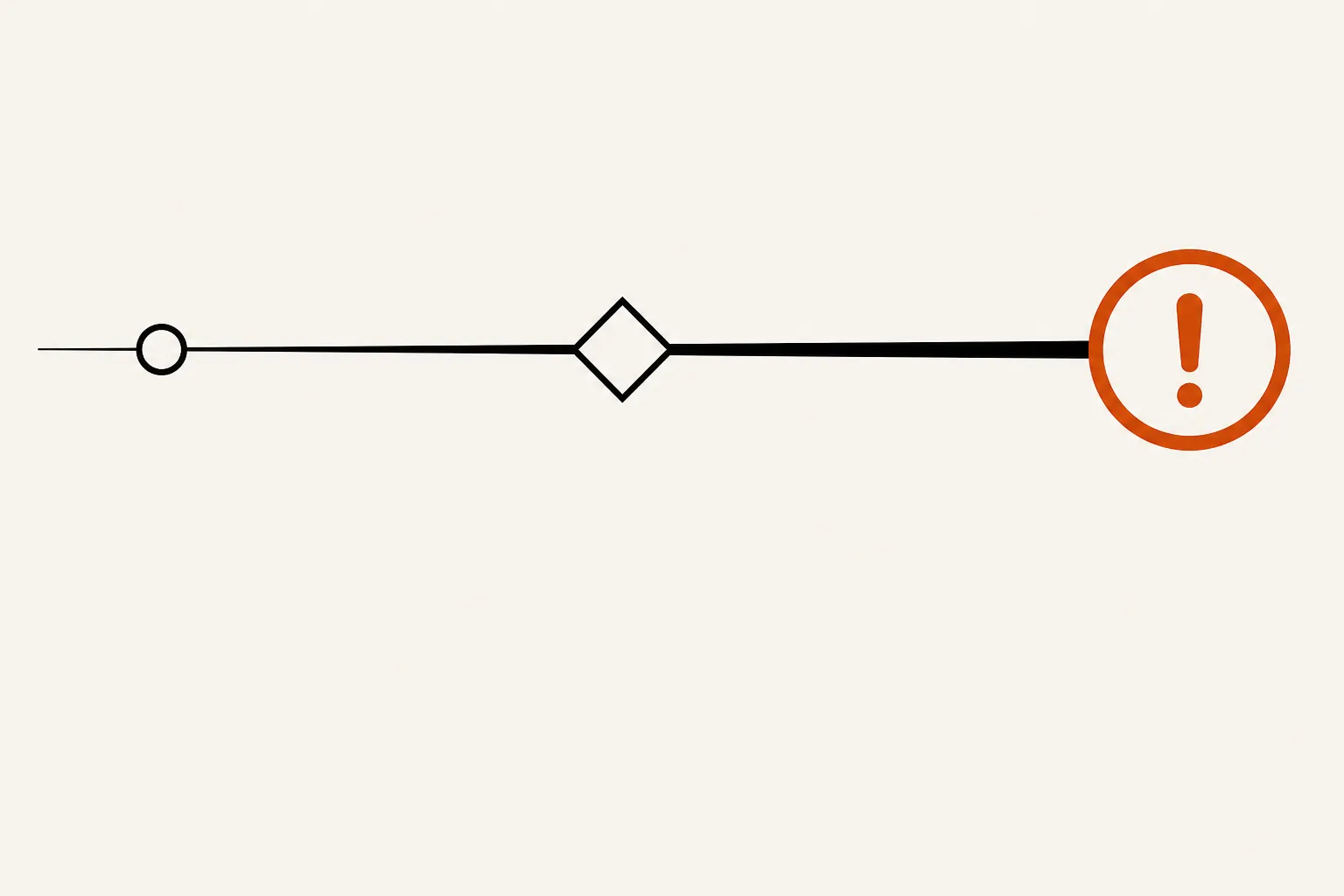
Which brings us back to June 12. The US government invoked export-control authority and required Anthropic to suspend all access to Fable 5 and Mythos 5 for foreign nationals, worldwide, including Anthropic’s own staff. Anthropic complied and publicly said it disagreed. Every product built on Fable 5 broke that day. Its other models kept running.
It would be a mistake to file this as “providers will deprecate you.” Anthropic didn’t want to pull Fable. The lesson is sharper: the risk envelope extends past the provider’s own intentions. A capability you don’t host is exposed to forces neither you nor the vendor controls — regulators, export law, a partner dispute, a court. A $1.45B valuation doesn’t insulate you from that. Amazon’s name on the round doesn’t either. “Who controls the model” has no clean answer when the answer isn’t you.
Fable is the dramatic edge. The ordinary version is duller and far more likely to be what you actually hit. Anthropic has retired more than a dozen Claude model IDs since November 2024, with a minimum notice of 60 days. OpenAI retired 33 models in early 2024; migrations hurt because output characteristics shifted under teams that had tuned prompts to the old behavior. OpenAI is winding Sora down in two stages, the app in April and the API in September 2026. None of that is malice. It’s the normal physics of building on someone else’s compute: the thing you depend on has its own roadmap, its own economics, and its own regulators.
For world models specifically, the exposure is worse, because there is no fallback to fall back to. There is no open-weight competitor to Odyssey, Genie 3, or Decart you can self-host when the terms change. The text and reasoning side of the stack has Llama, Qwen, and DeepSeek as escape hatches. The generated-worlds side has none yet.
What to do Monday morning
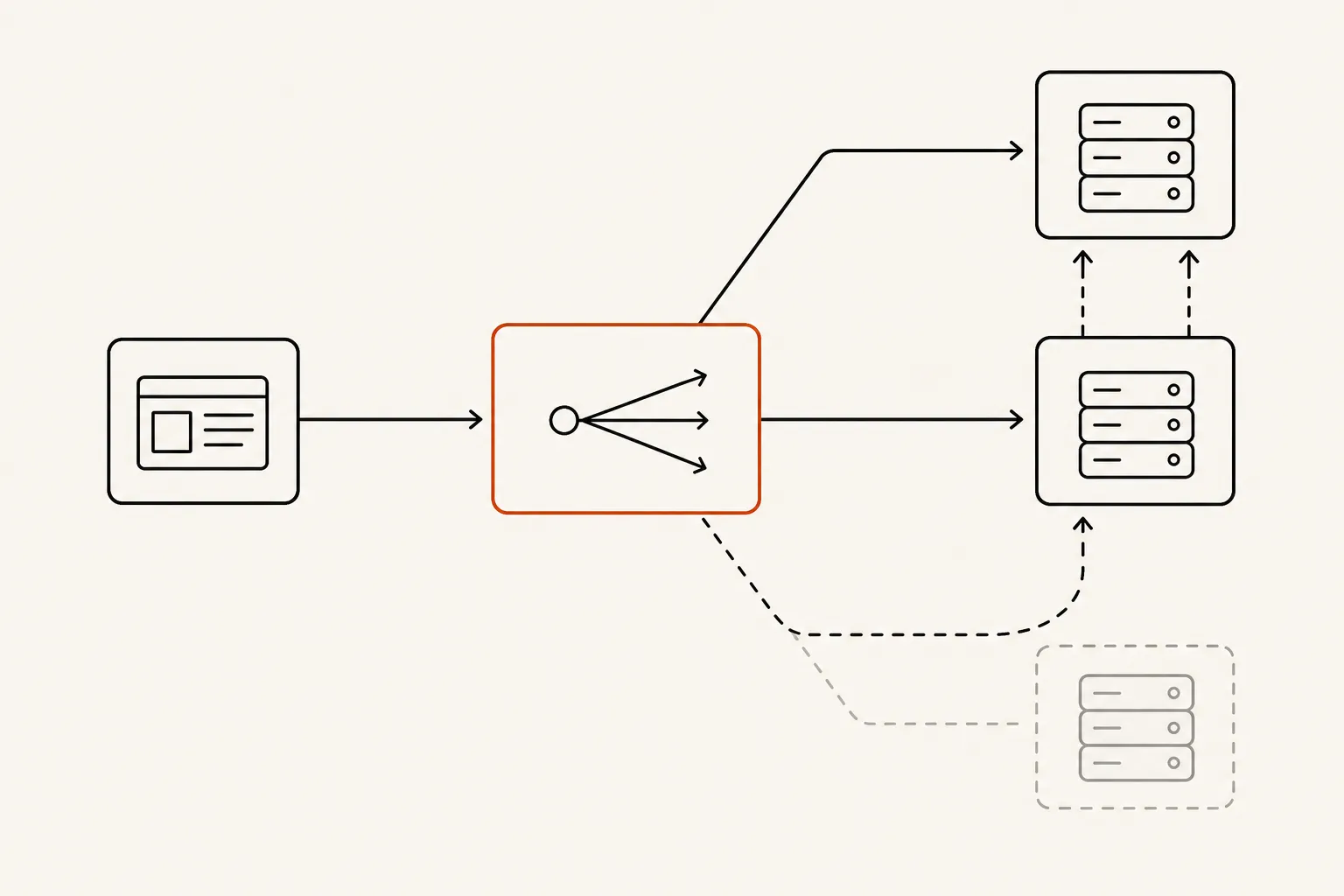
The posture isn’t fear, and it isn’t sitting out the wave. It’s treating anything you don’t host as rented, and architecting so that a change of landlord is a configuration change, not a rewrite.
Put a gateway between your code and any model provider. LiteLLM and Portkey both expose an OpenAI-compatible interface in front of many providers; OpenRouter fronts 300+ models behind one key. Swapping providers becomes config, not a refactor, and the per-request overhead is single-digit milliseconds. When OpenAI’s API went dark for 10–12 hours on June 10, 2025, the teams with gateway-level fallback kept serving. The teams without it did not. This is standard production infrastructure now, not paranoia.
Pin to versioned model IDs, not aliases. A *-latest alias moves under you silently, which is the same failure as a deprecation with none of the warning. Pin the version, subscribe to every provider’s deprecation page, and test against the next version before the retirement date — not after it breaks you. Where a provider gives no deprecation policy at all (every world-model and generative-media API today), treat access as provisional by default.
Name your no-fallback dependencies out loud. Walk your stack and mark each capability that has no open-weight equivalent you could stand up yourself. For most text and reasoning, a self-host path exists above a few million tokens a day. For generated worlds, it doesn’t. Depending on a single hosted world model can be the right call. The capability is real and you can’t build it yourself. The failure isn’t taking the dependency. It’s taking it without knowing you did.
Odyssey’s round is good news for what generated reality will be able to do. It is not a promise about what you’ll be allowed to keep using, on what terms, next quarter. Both of those things are true at once, and the gap between them is the part you actually have to engineer around.
WEEKLY NOTE
One note per week.
One short note from current work plus 2–3 outside links worth your time.
No spam. Unsubscribe anytime.
Oleksandr Kotliarov
Founder · Engineering Lead · Kraków, Poland
I build engineering teams that ship — from MVP to Series A delivery.